
Home Inspo, Inspiration, Home Improvement, Interior Design, Drains
Center Drain vs. Linear Drain

Apr
Which Shower Drain Is Right for You?
When designing or remodeling your shower, one of the most overlooked, but most important, decisions is choosing the right drain.
The two most common options are center drains (traditional point drains) and linear drains (modern channel drains). While both serve the same purpose, they dramatically impact your shower’s design, installation, performance, and overall look.
In this guide, we’ll break down the pros and cons of each, so you can confidently choose the best option for your bathroom.

What Is a Center Drain?
A center drain is the traditional shower drain located in the middle of the shower floor. Water flows from all directions into a single point.
Because of this, the floor must slope from four directions toward the center, which affects tile layout and installation.
👉 Browse Designer Drains’ premium center drain covers
Pros and Cons of Center Drains
✅ Pros of Center Drains
1. Budget-Friendly
Center drains are typically much more affordable than linear drains, both in product cost and installation.
2. Easier Installation
Plumbers and contractors are very familiar with center drains, making them quicker and simpler to install.
3. Wide Compatibility
They work well with:
- Most shower sizes
- Standard plumbing layouts
- Traditional bathroom designs
4. Low Maintenance
With a smaller surface area, center drains tend to collect less debris, making them easier to clean over time.
❌ Cons of Center Drains
1. Limits Tile Design
Because the floor slopes in four directions, you’ll typically need:
- Smaller tiles (like mosaics)
- More grout lines
This can affect both appearance and cleaning.
2. Less Modern Aesthetic
Center drains are functional, but they don’t offer the same sleek, luxury look as linear drains.
3. Potential for Water Pooling
In larger showers, water may not flow as efficiently compared to linear systems.
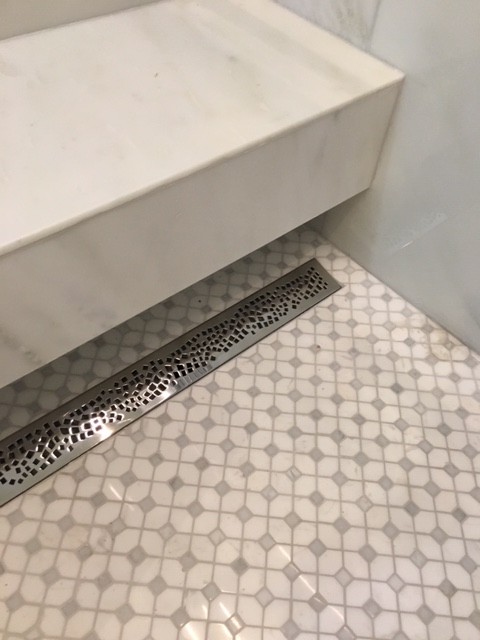
What Is a Linear Drain?
A linear drain is a long, narrow drain installed along one edge (or wall) of the shower.
Instead of sloping in multiple directions, the floor slopes in one single direction, simplifying design and enabling modern layouts.
👉 Explore our modern linear-style designs and finishes
Pros and Cons of Linear Drains
✅ Pros of Linear Drains
1. Modern, Luxury Look
Linear drains create a high-end, spa-like appearance and can even be nearly invisible with tile-in designs.
👉 See Designer Drains’ decorative and designer finishes for a custom look.
2. Works with Large Format Tile
Because the floor slopes in one direction, you can use:
- Large tiles
- Continuous patterns
- Fewer grout lines
This is a huge design advantage.
3. Better Water Flow
Linear drains cover a larger area, helping:
- Reduce water pooling
- Improve drainage efficiency
Especially useful for multi-showerhead or large walk-in showers.
4. Perfect for Curbless Showers
Linear drains are ideal for:
- Walk-in showers
- ADA-accessible bathrooms
- Open, seamless designs
❌ Cons of Linear Drains
1. Higher Cost
Linear drains are considered a premium upgrade, with higher material and labor costs.
2. More Complex Installation
They require:
- Precise sloping
- Careful waterproofing
Improper installation can lead to drainage issues.
3. More Maintenance
Because of their longer shape, linear drains:
- Collect more hair and debris
- Require more frequent cleaning
Center Drain vs. Linear Drain: Quick Comparison
| Feature | Center Drain | Linear Drain |
|---|---|---|
| Cost | Lower | Higher |
| Installation | Easier | More complex |
| Floor Slope | 4-direction slope | 1-direction slope |
| Tile Options | Small tile recommended | Large tile friendly |
| Design Style | Traditional | Modern / luxury |
| Drainage Efficiency | Standard | High (especially large showers) |
| Maintenance | Easier | More frequent cleaning |
Which Shower Drain Should You Choose?
Choose a Center Drain if you:
- Want a budget-friendly solution
- Prefer simple installation
- Doing a standard shower remodel
Choose a Linear Drain if you:
- Want a luxury, modern aesthetic
- Plan to use large-format tile
- Building a walk-in or curbless shower
- Need better drainage for larger spaces
Final Thoughts
Both center and linear drains can perform exceptionally well; it ultimately comes down to your budget, design goals, and shower layout.
If you’re aiming for a custom, high-end look, a linear drain is hard to beat. But if you want reliability, simplicity, and affordability, a center drain is still a great choice.
Upgrade Your Shower with Designer Drains
At Designer Drains, we offer a wide range of:
- Decorative drain covers
- Custom finishes (matte black, brushed brass, polished stainless, and more)
- Unique designs that turn your drain into a statement piece
👉 Shop now:
https://designerdrains.com/
👉 Learn how to measure your drain (helpful guide)
👉 Learn what the different types of drains (helpful guide)
👉 Learn about Luxury Shower Drains (helpful guide)
